W3TS Recap: SMART CONTACT feat. Kevin Kang (Reap)

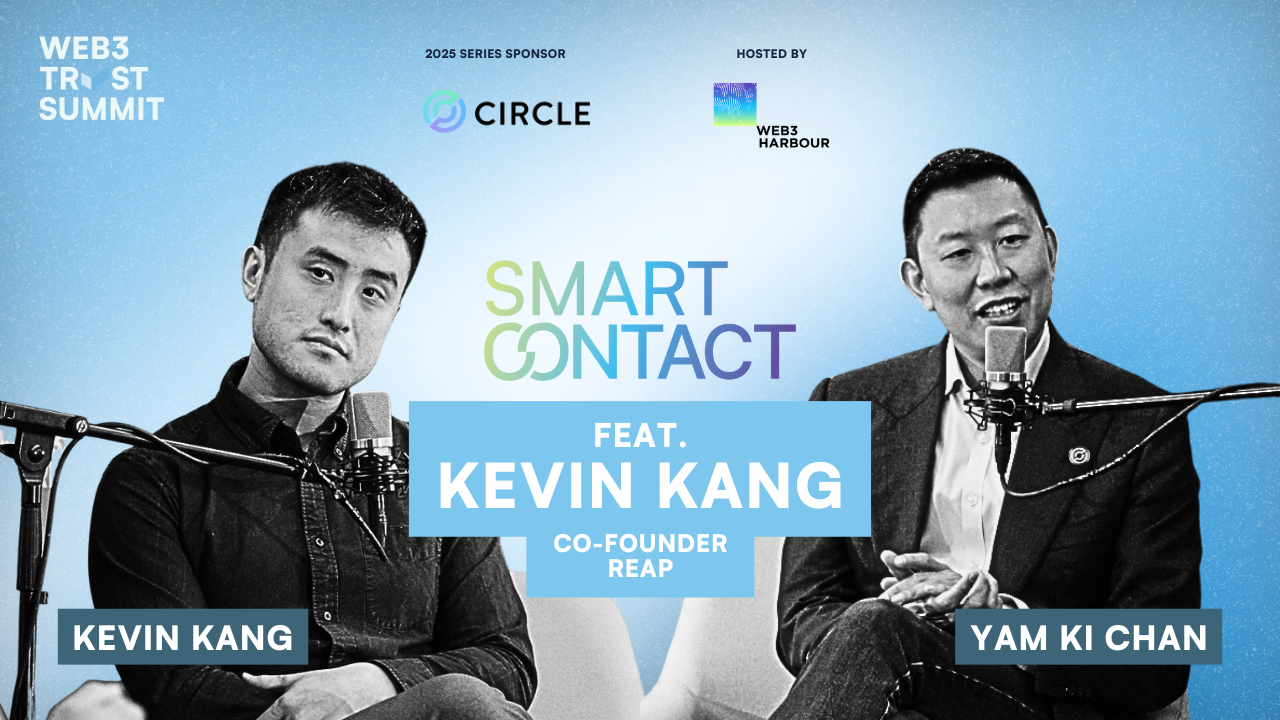
The Web3 Trust Summit 2025 concluded with a conversation that reframed stablecoins not as speculative instruments but as infrastructure for financial services export.
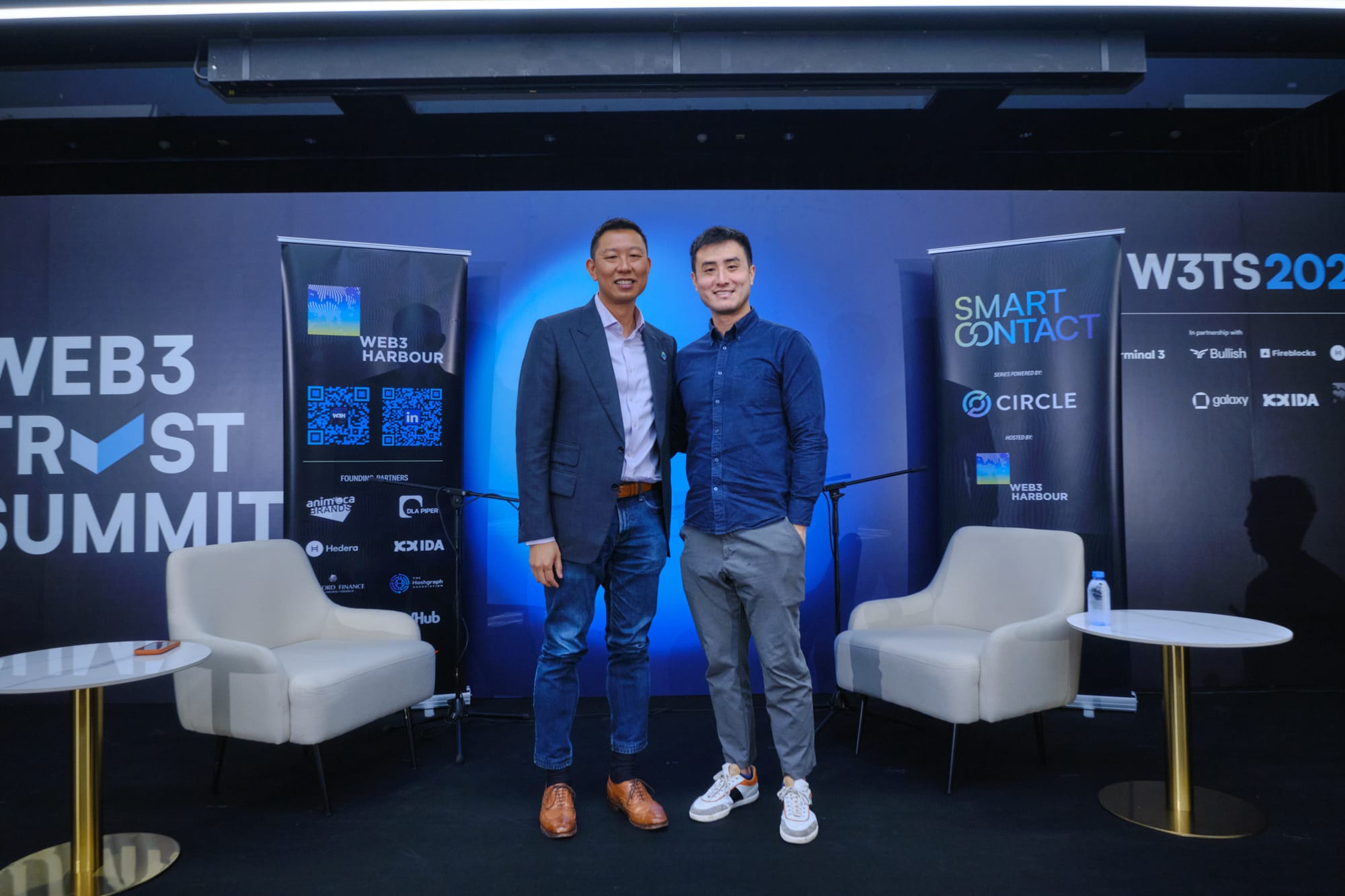
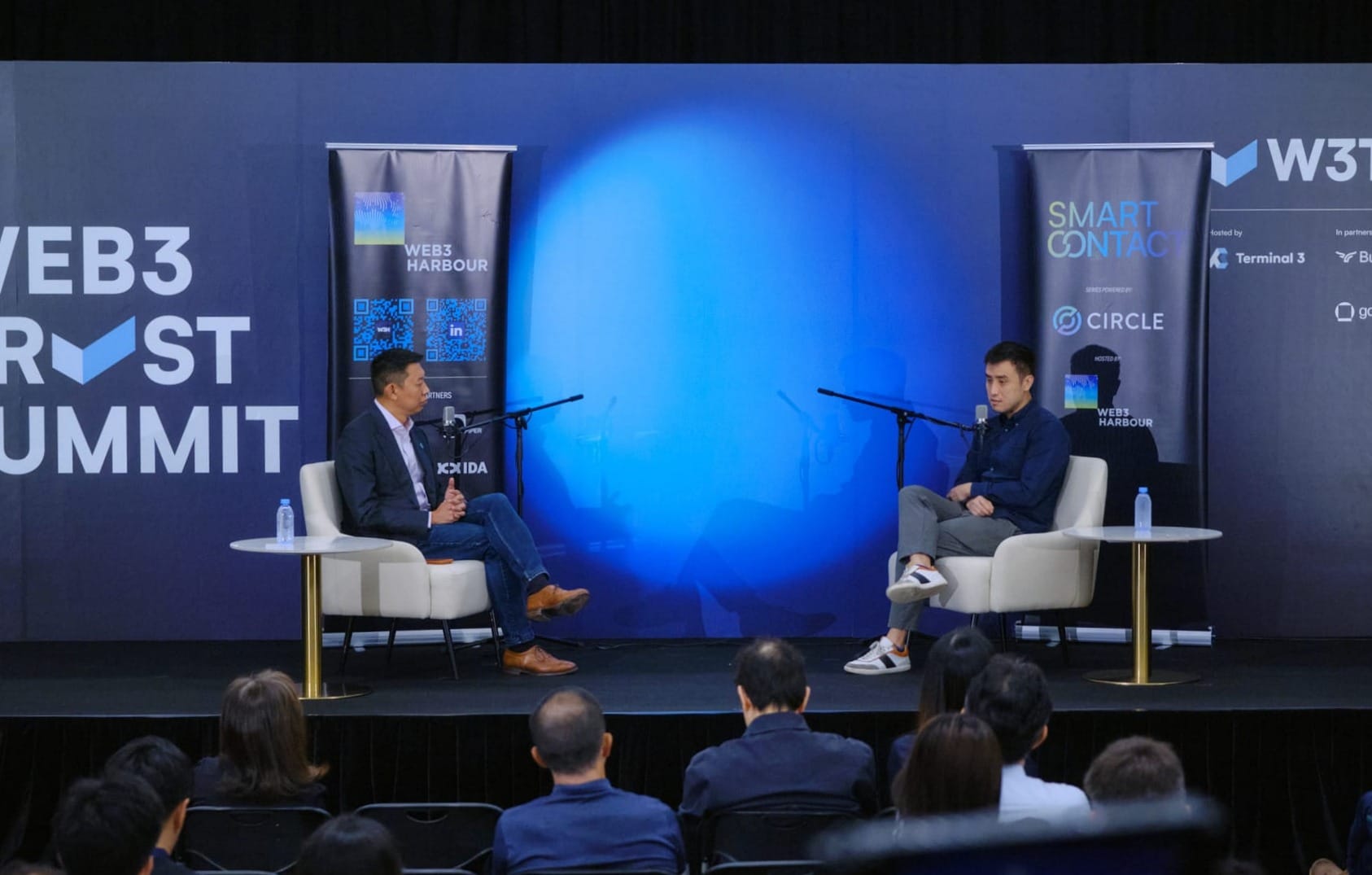
The fireside chat between Kevin Kang (Co-Founder, Reap) and Yam Ki Chan (VP APAC, Circle) was yet another insightful addition to the Web3 Harbour SMART CONTACT series, a podcast recorded with a live audience.
The discussion revealed how Hong Kong's unique position enables companies to build capabilities locally and distribute them globally—but only if they solve the right problems.
The asymmetry problem
Kevin's journey with Reap exemplifies how technology adoption follows necessity: The company didn't start with blockchain and only migrated to stablecoins because customers demanded better settlement rails.
Reap’s origin traces back to a simple observation about global financial inequality by its founders. Kevin and his co-founder Daren, both raised in Canada after being born in Mainland China, internalized what it means to be a global citizen. Working across Hong Kong and Singapore exposed them to stark asymmetries. Kevin explained,
"Capabilities around card issuance, cross-border remittance, yielding, multi-currency accounts are not the same in Latin America, Africa, and Southeast Asia."

Building in Hong Kong means serving nearly eight million people where every major player operates. Scale requires global distribution but traditional rails made exporting capabilities expensive and unreliable.
The actual breakthrough, however, came from customer demand. When exchanges and digital wallets asked to settle using stablecoins rather than converting to fiat, Reap realized they could apply that same thinking to their capabilities—bringing that into our card issuing and cross-border payments.
First principles over terminology
A key insight for Reap involved communicating blockchain value to non-crypto companies. To make this possible, they deliberately avoided crypto terminology and focused on the capabilities of that network.
They positioned it as a “means to an end” that allowed businesses to gain access to things they previously didn’t have access to, like card issuance and payment capabilities. It was meant to serve as an analogous network to traditional payment systems.
If you have an older network that's slower, requires batch processing, has unreliable messaging, and you have a new network that is suddenly solving all of these problems, which would make more sense for fintech infrastructure?
This also explains geographic patterns. Yam Ki noted that stablecoins originally served crypto trading because US markets already had developed payment systems. The incremental improvement wasn't compelling for other uses. Kevin reinforced:
“In Hong Kong, Singapore, and emerging markets, payments is what makes sense. People aren't just going after crypto trading. Non-crypto trading volumes are coming from markets outside the US.”
Stablecoin adoption follows pain points, not technology advocacy. Markets with fragmented infrastructure and limited banking access see immediate value.
Building for a closed-loop future
Kevin articulated a vision where the entire financial stack operates natively on blockchain rails rather than constantly bridging systems.
Public blockchains can now all implement AML and KYC natively, so the real challenge is trust and regulatory enforcement and how they are applied to digital assets. As Kevin explained:
“A lot of regulation is applicable to the traditional financial system—enforcement happens when funds enter the traditional system. We need to build that capability natively.”
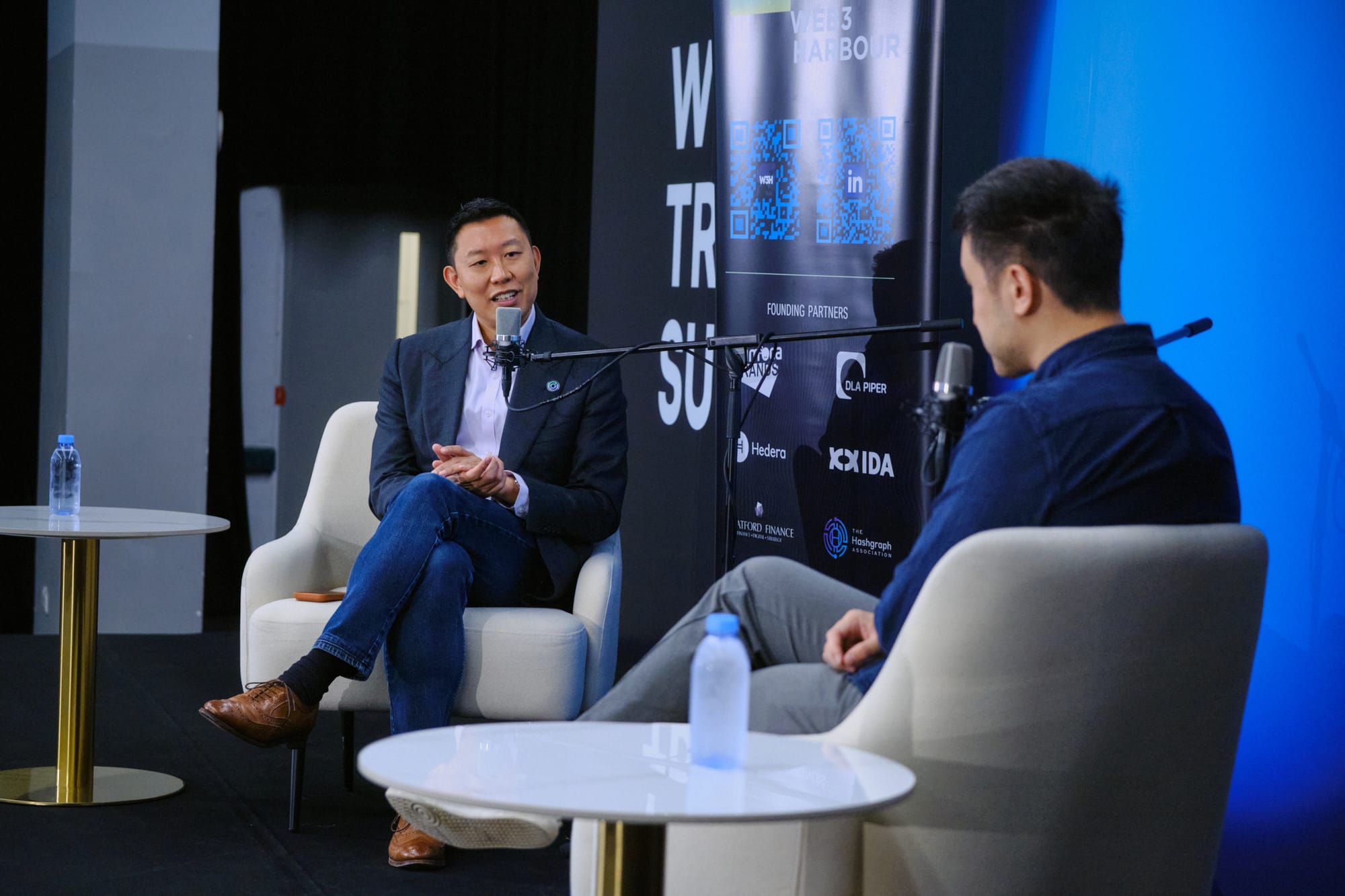
This connects to Circle's Arc blockchain, designed with distributed governance and built-in privacy for institutional comfort. Yam Ki described allowing openness while maintaining the trust and confidence that’s needed for regulators as well as financial institutions to build on this network.
Kevin reiterated this thought by sharing his vision for the future:
“If everybody upgrades their technology, we can operate on the same system and have agentic commerce, programmable money. We can talk about these in real terms throughout the value chain.”
Programmable money enables new business models—micro-payments not viable with fixed costs, conditional payments with complex logic, streaming rather than batched settlements. Trade finance becomes computationally feasible.
The global services exporter model
During the conversation, Kevin coined a term that captured Reap's positioning: “financial services exporter.” Build capabilities in Hong Kong—leveraging its unique dollar clearing and established infrastructure—then export globally via stablecoin rails.
Reap now operates across 18 countries and has witnessed the fastest growth in Mexico and Brazil. Explaining how this works, Kevin said,
“Every entry to a new market has a very high marginal cost. But building on inherently global technology like stablecoins, you take advantage of the reduced marginal cost.”
The parallel to internet disruption is deliberate. E-commerce made it trivial to create globally-reaching stores. But until recently, moving money hadn't moved at internet scale. As Yam Ki rightly put it: “We're just at the tip of that iceberg.”
And therein lies the opportunity. If Kevin’s advice is anything to go by,
“Technology is changing quickly, but we're building on giants' shoulders. Take advantage of shifting dynamics, but don't stop there. What if there is a Web4? Always look forward."
The infrastructure is ready and use cases have been proven. We just have yet to see if all ecosystem players can work together to create truly interoperable, future-ready system, or if we will be riddled by regulation burdens and walled gardens.