W3TS Recap: Capital Confidence— Institutional Investment in Digital Assets

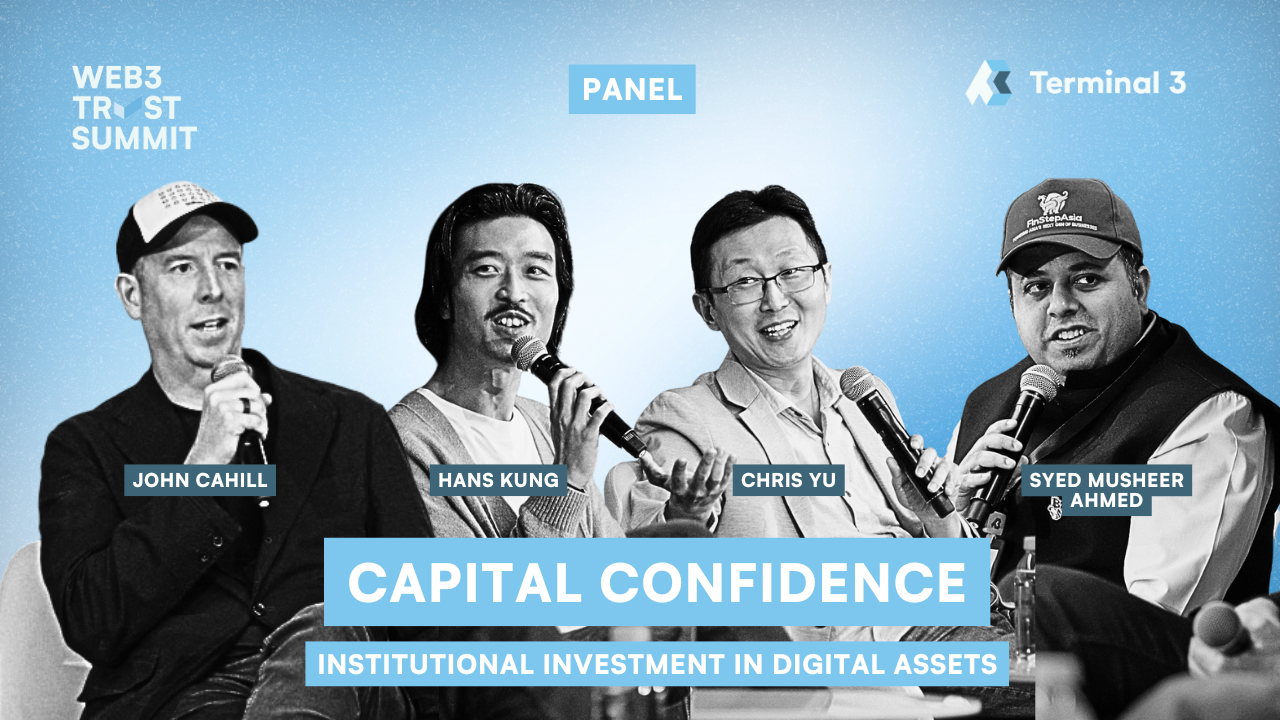
A panel on institutional investment in digital assets at the Web3 Trust Summit 2025, hosted by Terminal 3, revealed a rather counterintuitive truth: crypto's professionalization is succeeding precisely because it is becoming less exciting.
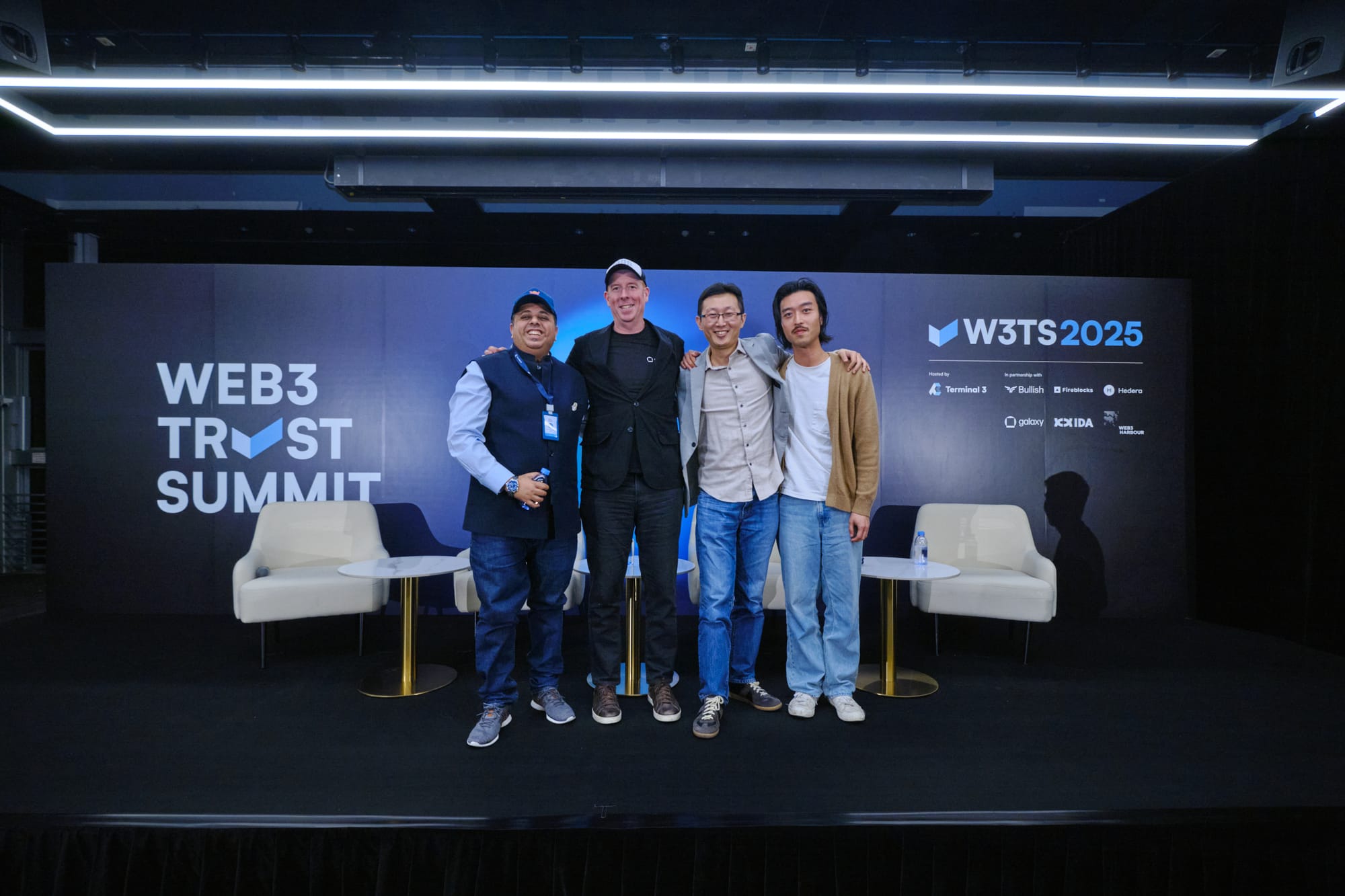
The panel was moderated by Syed Musheer Ahmed (Founder, FinStep Asia) and brought together:
- John Cahill (COO (Asia), Galaxy)
- Chris Yu (CEO, SignalPlus), and
- Hans Kung (CIO, Pulsar)
During the session, panelists exposed how success in digital assets increasingly looks like failure to those chasing exponential returns. It is not a mistake—it is the entire point of institutional adoption.
The layering effect
Institutional capital enters in layers, each with different risk appetites building upon the previous cohort. Early participants—crypto-native funds, trading firms, market makers—absorbed volatility and built infrastructure, establishing liquidity depth that made the asset class accessible to more conservative entities.
"We have institutional investors with different risk appetites. Players with biggest risk appetite participated early and built liquidity, essential for other players with a lower risk appetite." - Chris Yu, SignalPlus
As volatility normalizes, a new tier becomes viable in the form of pension funds, endowments and sovereign wealth funds—entities managing permanent capital with fiduciary duties prohibiting frontier speculation.

"A few years back, traditional money related crypto to an exponential upside—something that goes up 100x, 1000x. After 2021, vintages had significantly deteriorated returns. Fast forward to today, even the same investors' appetite has become more mature, focusing on yield enhancement, systematic strategies for in-line returns." - Hans Kung, Pulsar
The same institutions that once dismissed anything below 1000x potential now allocate seeking risk-adjusted returns comparable to traditional strategies.
The venture capital reckoning
The clearest evidence of changing priorities appears in venture funding. The 2021-2022 vintage that raised record capital now confronts sobering reality: token supply exploded while demand hasn't kept pace. Projects raised successfully but delivered nothing beyond narrative.
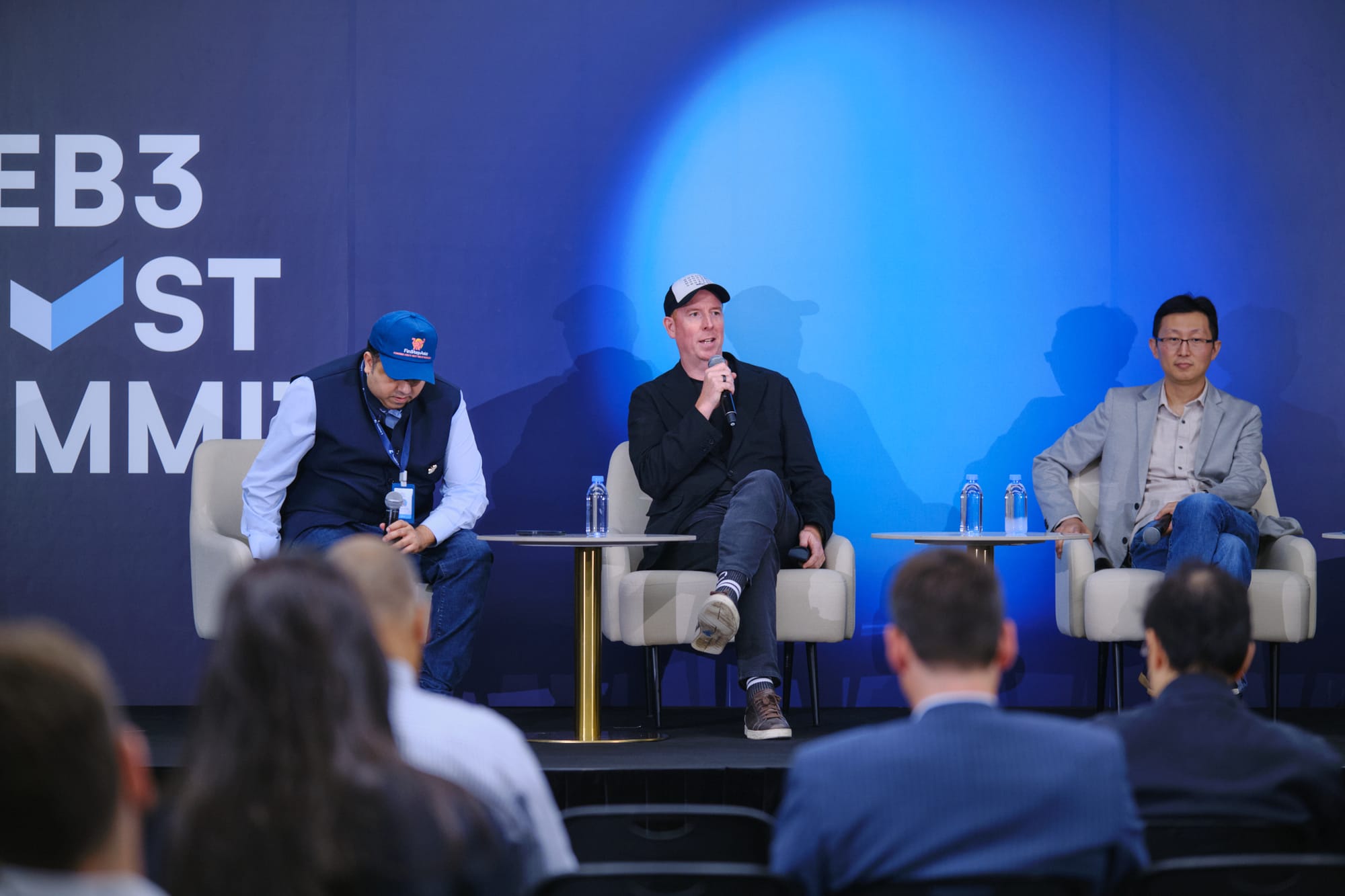
"It’s been really hard to raise money for venture. We closed our first venture fund with external capital in June with 175 million, but it took solidly two years to find that money. It's very hard to raise money on the venture side because of the liquidity lockup. People don't want to have capital deployed for seven-year returns, particularly because the opportunity set has been challenged." - John Cahill, Galaxy
Hans also noted the dilution:
"The magnitude is higher for VC-backed tokens in the market now compared to four or five years back. Not only is the demand side not catching up fast enough, but you know the dilution is real. There is an underperformance on our side and the market has become selective."
As John rightly observed, there’s now more of a “usefulness test”. Raising money used to be the goal, but there was no follow-through on delivering something people cared about or wanted to use beyond a narrative. But that approach is no longer viable with the standards for capital allocation getting much higher.
But here’s the paradox that many miss. Institutionalization leads to lower returns on majors, but that's precisely what makes the asset class institutional-grade. Risk-adjusted returns become the metric. Consistent mid-double-digit returns with manageable drawdowns attract exponentially more capital than lottery ticket volatility.
Structured products as the convergence point
The institutional opportunity is concentrated in structured products, where we see an intersection of Bitcoin holdings, yield generation, and sophisticated risk management. The demand drivers have aligned around liquidity depth, mature derivatives markets, and institutional demand for yield.
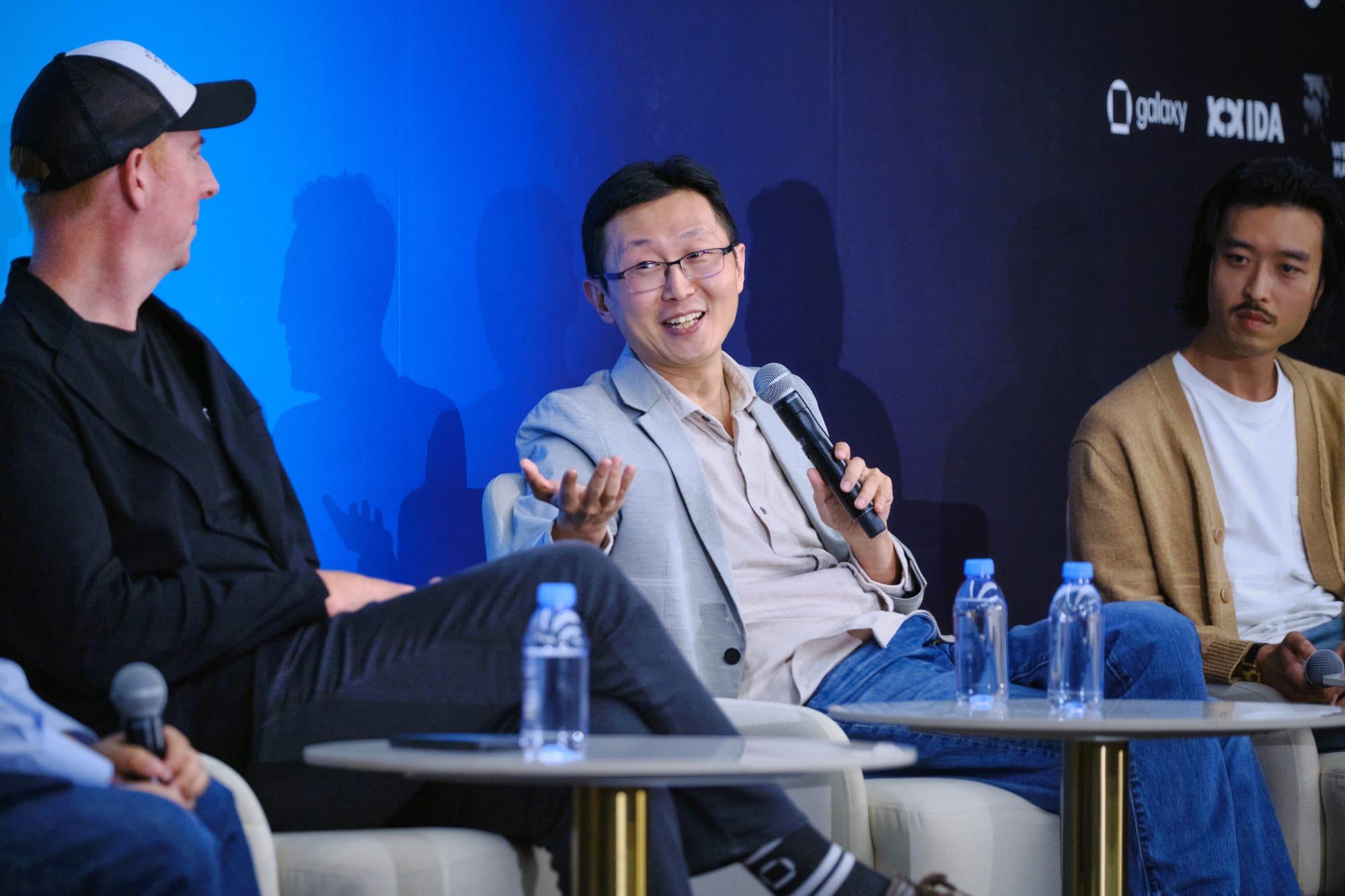
Chris positioned this as the next explosive area of growth:
"To have proper, healthy structured product markets, you need underlying assets liquid enough with good depth. The majors now have significantly good liquidity, even sometimes better than some emerging market currencies."
Structured products built around composable trading using publicly available information may even be ideal for government-backed decentralized finance (DeFi) projects. If a government supports a standard derivative clearing protocol on-chain, it can tremendously help reduce counterparty risk.
Execution, however, requires different infrastructure. Traditional markets operate five to eight hours daily, whereas crypto's 24/7 nature demands full automation and systems functioning without human intervention during crises.
The 24/7 future
Crypto's always-on nature isn't an aberration but a preview of where all markets are heading. 24/7 is likely coming for every asset under the sun. It's a when, not if.
This reframes the conversation entirely. Institutions building capability to trade crypto around the clock aren't solving a crypto-specific problem—they're developing infrastructure that will apply across tokenized assets as traditional finance digitizes.
The fragmentation across venues and jurisdictions creates both opportunity and friction. Unlike traditional assets trading on one or two venues, crypto's multi-venue nature generates arbitrage opportunities while complicating regulatory compliance. John articulated the tension:
"Crypto is borderless, regulations are local.”
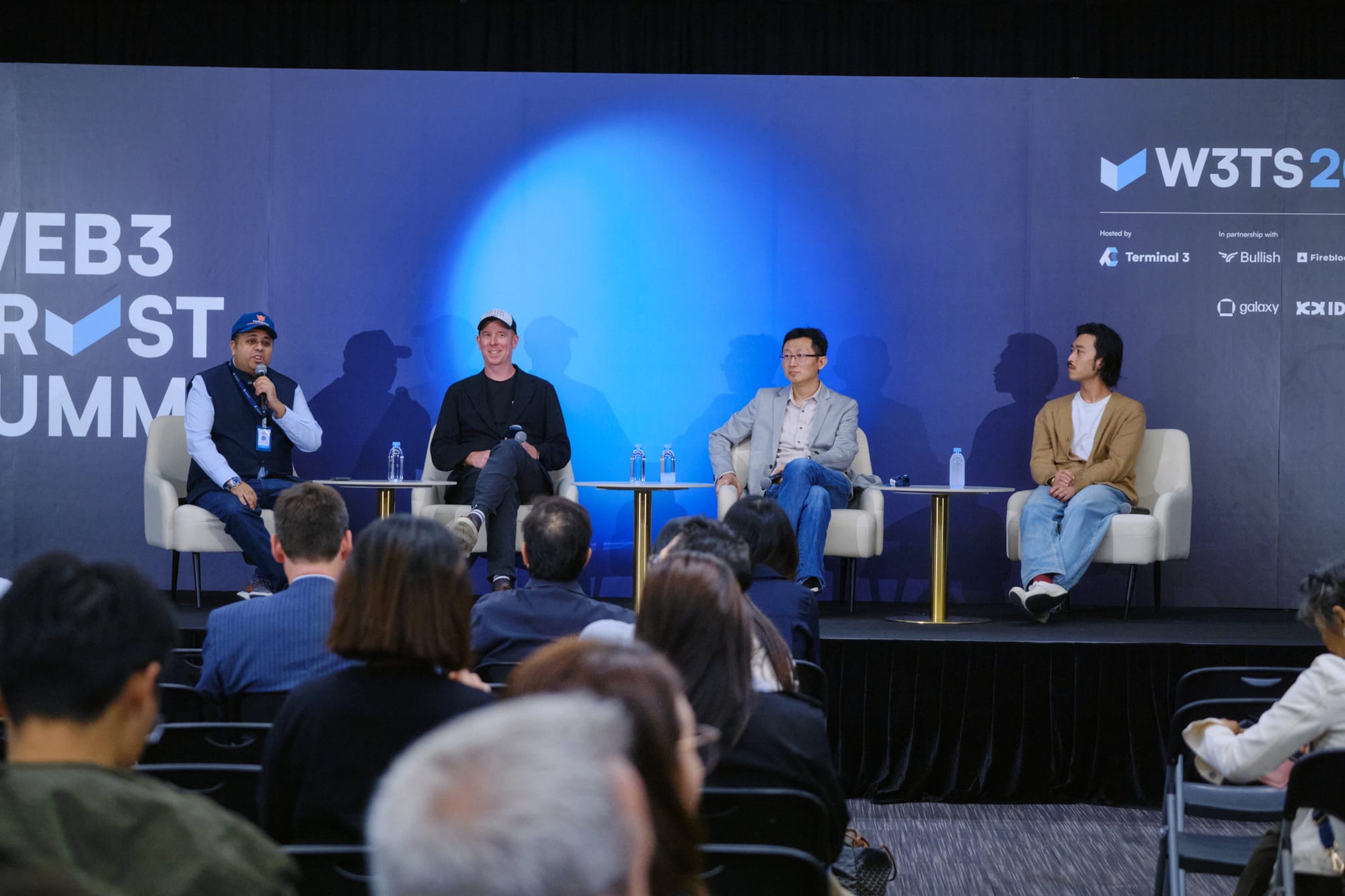
That said, the control is somewhat artificial when applied to crypto. The entire world is moving in a more regulated direction, and directionally it’s where things must go. Safety increases liquidity and participation. But you also need harmonization of rules. Regulatory frameworks must enable rather than constrain implementation. Creating arbitrage opportunities just through regulation undoes good intentions.
The infrastructure is ready and the frameworks are maturing. The question is whether regulatory harmonization can keep pace—or whether fragmentation becomes permanent.